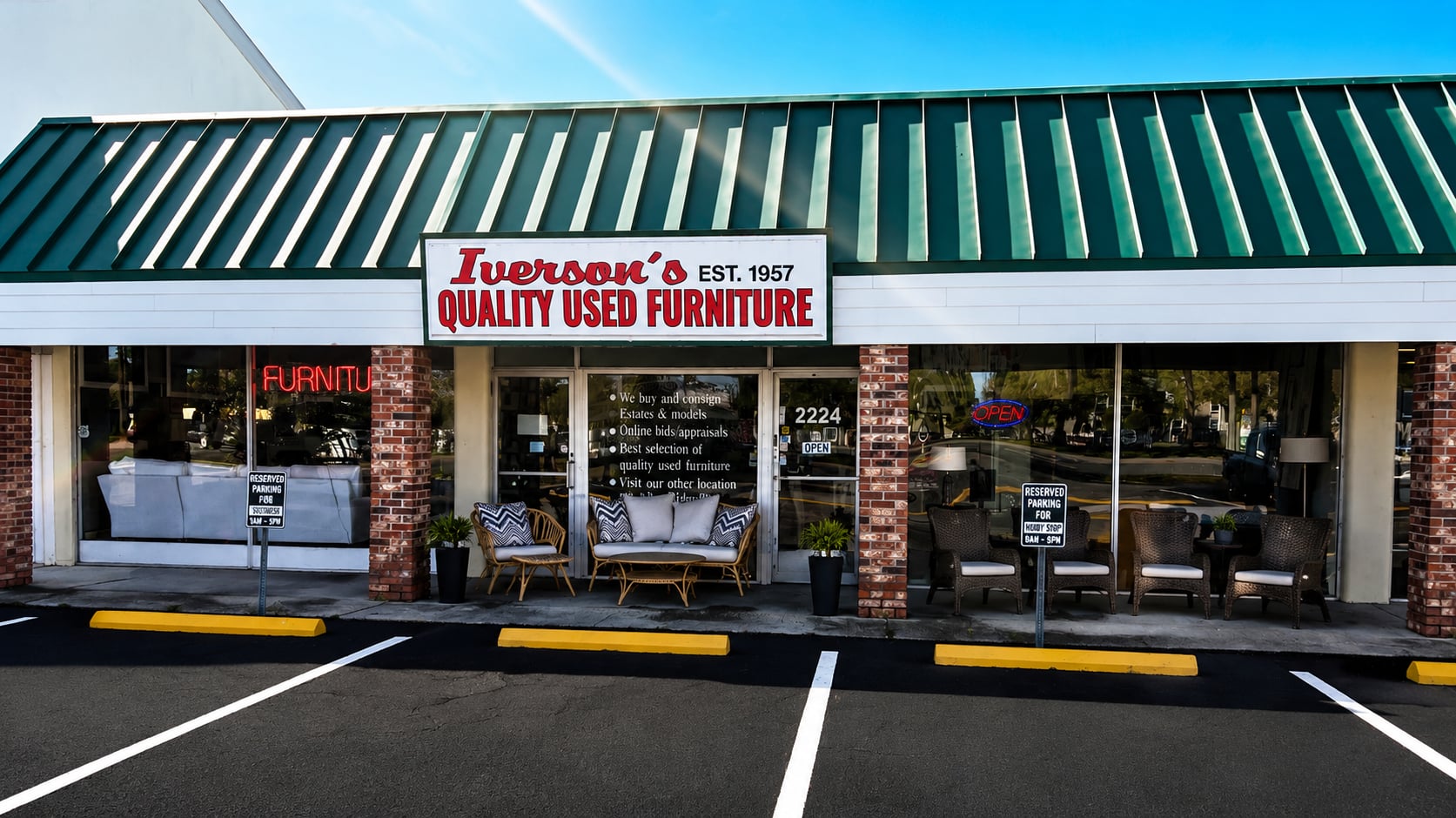
Long before "sustainability" became a buzzword, before "upcycling" entered the common vocabulary, and before anyone talked about carbon footprints, Iverson's Quality Used Furniture was quietly doing the work. Since 1957, the family business has been giving quality furniture a second life — keeping beautifully crafted pieces out of landfills and putting them into homes where they're appreciated all over again.
It's easy to forget, in an era of disposable furniture and flat-pack assembly, that not so long ago furniture was built to last. Solid wood frames, hand-tied springs, dovetailed drawers, and quality upholstery were the standard, not the exception. The pieces that came out of that era were designed to serve a family for decades — and many of them still have decades of life left.
The Problem with Throwaway Furniture
Each year, Americans discard millions of tons of furniture. Much of it is particleboard and plastic that was never meant to last more than a few years. But mixed in with that waste are solid wood tables, well-made chairs, and quality bedroom suites that simply fell out of fashion or outgrew their original homes. Iverson's has been rescuing those pieces for over six decades.
Every piece we sell is one less piece in a landfill. That's not a marketing line — that's just what we've always done.
The consignment model is at the heart of this effort. When a family downsizes, relocates, or simply refreshes their decor, they bring their quality furniture to Iverson's rather than tossing it. The store inspects each piece, prices it fairly, and puts it on the showroom floor where another family can discover it. It's a cycle that benefits everyone — the seller earns money, the buyer saves money, and the environment gets a break.
Quality That Outlasts Trends
The furniture at Iverson's isn't just used — it's quality. The team has decades of experience identifying well-constructed pieces from makers like Ethan Allen, Thomasville, Lexington, Stanley, and Baker. These are brands that built their reputations on craftsmanship, and their pieces hold up beautifully over time. A solid oak dining table from the 1980s can easily outlast a brand-new table from a big-box store bought today.
That's the real sustainability story at Iverson's: it's not just about reuse, it's about quality. When you buy a well-made piece of furniture, you're not just furnishing a room — you're investing in something that will serve your family for years, and then someone else's family after that. That's the kind of sustainability that doesn't require a marketing campaign. It just requires good furniture and a commitment to keeping it in circulation.
A Model for the Future
As more consumers become conscious of the environmental impact of their purchases, the consignment model that Iverson's has practiced for decades is finally getting the recognition it deserves. It's a model that reduces waste, supports local families, and makes quality furniture accessible to everyone — regardless of budget.
Sixty-plus years ahead of the curve. That's the Iverson's way — and it's more relevant today than ever.